

Check the FBS for 6 second video snapshots of our work throughout Frontenac County this summer!
Check the FBS for 6 second video snapshots of our work throughout Frontenac County this summer!
.
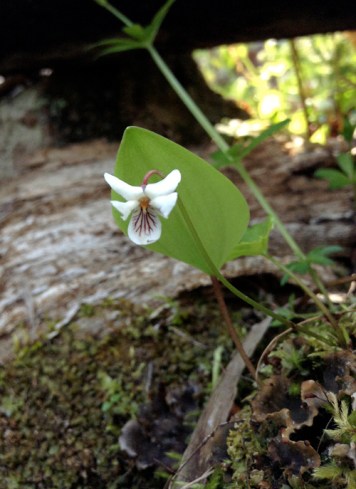
This has to be my favourite spot in all of the FBS study area – Hemlock Lake. Officially, the lake has no name but the abundance of hemlock here made for a convenient and appropriate namesake. I always visit in May, even though we haven’t conducted any fieldwork here since our trial MAPS station was shut down in 2009. It’s just one of those places. It has skinks and otters, lots of Winter Wrens, Brown Creepers and other South Frontenac goodies. On the downside it does seem to have a lot of Deer Ticks. I’ve been bitten twice, both times requiring doses of Doxycycline. It would be an incredible spot for a cottage if not for the aforementioned bloodsuckers and also the tangled mess of downed trees and thick coverage of raspberry canes (the site has endured what appears to have been an outbreak of Hemlock Borer). It’s a rugged place indeed. So rugged that it forced us to discontinue our MAPS station here after only two visits. At the end of each of those field days we felt well and truly knackered. I do hope that no road or cottage ever ends up at Hemlock Lake – it’s rampant wildness is its charm.
.

.
.

.

 .
.
Time flies when you’re having fun studying birds! We launched FBS with our first season no less than five years ago. This year, our fifth consecutive, we will be branching into some new and exciting territory and also revisit all of the familiar survey routes that we established way back in 2009 – it promises to be a big year for FBS. Read on for more information on our activities this season.
In 2009 we completed surveys at over 150 point count stations throughout our study area. We surveyed along roadways, off the beaten path, and in everything from rock barren habitat to mature Sugar Maple-Oak forests. This June we will return to these routes for another round of counts, which will be a key contribution to our growing dataset on local population trends.
Since the beginning we’ve made it an annual priority to address locally occurring rare and declining species through monitoring and research. After three years dedicated to Prairie Warblers and Louisiana Waterthrushes, we are now turning our attention to Cerulean Warblers in collaboration with an Ontario-wide initiative led by Bird Studies Canada. Cerulean Warblers are now considered Threatened in Ontario and have been recommended as nationally Endangered by COSEWIC. Frontenac Provincial Park has a substantial percentage of Canada’s breeding Ceruleans, further evidence of the importance of the park and the Frontenac Arch overall to Species at Risk.
As if we need more to do! Our focus on Prairie Warblers and Louisianas over the last four years has carried us to familiar haunts, largely the rock barrens and pristine stream valleys in Frontenac Provincial Park. Key sections of the 5000 ha wilderness park have yet to be explored and as a result, some of the less common nesting species have only been rarely encountered if not missed altogether. Providing that our feet can take the punishment, our plan is to close some of these gaps with exploratory searches for these “missing” species in 2013.
For the past three years we’ve had great success with our annual Frontenac Biothon, which was both a valuable data gathering event and also a fundraiser. This year we will stay true to the same basic formula but with a focus on collecting breeding evidence for the park’s bird species – essentially a 24-hour mini-atlas! Thanks a bunch to all who have supported us in the past. We hope you’ll make another pledge this year! Click here for more information and/or to make a donation to the Frontenac Avian Atlas Day.
As always, you can follow our progress throughout the spring/summer field season via our blog and twitter and Facebook. Please note that our mailing address has changed (see below for new address).
Best wishes,
Dan Derbyshire
Project Lead, Frontenac Bird Studies
Migration Research Foundation
106 Duncan St
Smiths Falls, ON, K7A 4S4
http://www.migrationresearch.org
http://www.frontenacbirds.ca
.
The 2012 season of our Frontenac Breeding Birds program is officially wrapped. All reports and data have been submitted and our attention has already shifted to 2013. We are particularly excited about this upcoming season, our fifth, as we will be turning our attention to new subjects after having just completed three consecutive years of monitoring Louisiana Waterthrush and Prairie Warbler. We will reveal our plans in the coming months once our preparations are completed.
A big thanks are due to all of our readers, sponsors and friends who continue to make FBS possible!
Our annual Frontenac Biothon was held the weekend of June 9-10, 2012. We were rather nervous about the unstable weather forecast for the weekend but we managed to stay relatively dry and comfortable for the 24-hour blitz. During the inaugural biothon in 2010 we tallied a respectable 431 floral and faunal species in the Big Clear Lake area in the northeast zone of Frontenac Provincial Park. Last year we conducted an extensive tour spanning the rock barrens in the southeast to more mature forest habitats closer to the northwest section of Frontenac. In all, 466 species were identified in 2011. Results from both years combined comprise 727 unique species identified within the boundaries of the park!

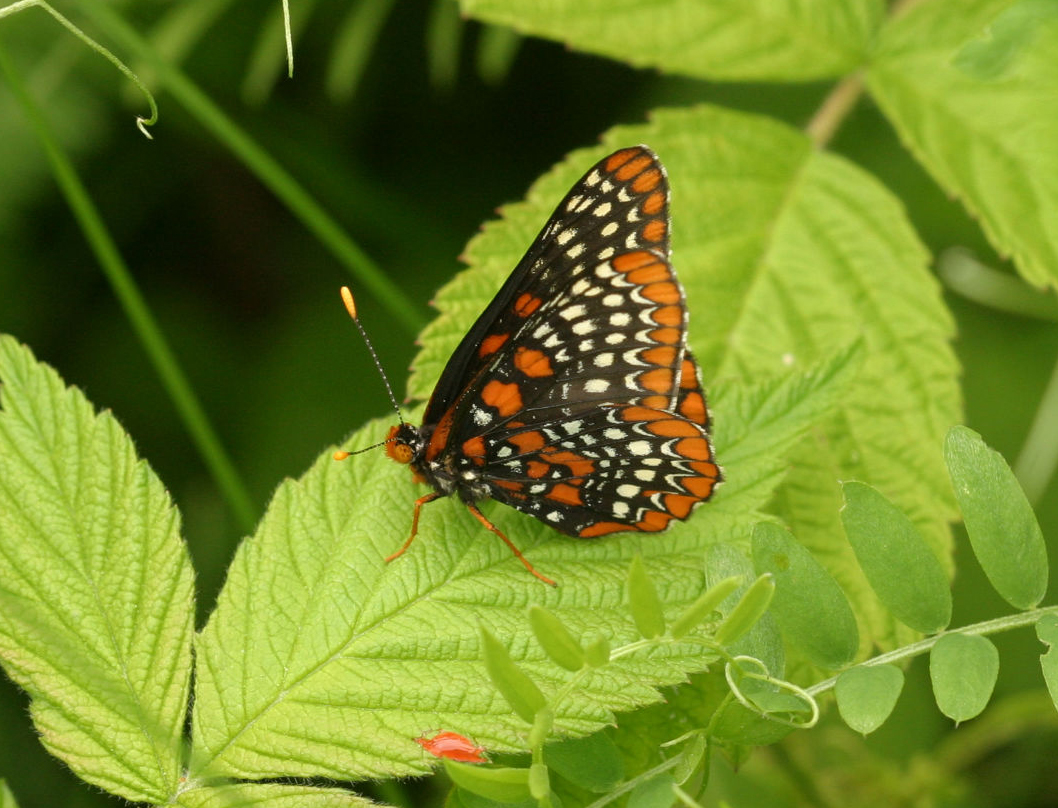
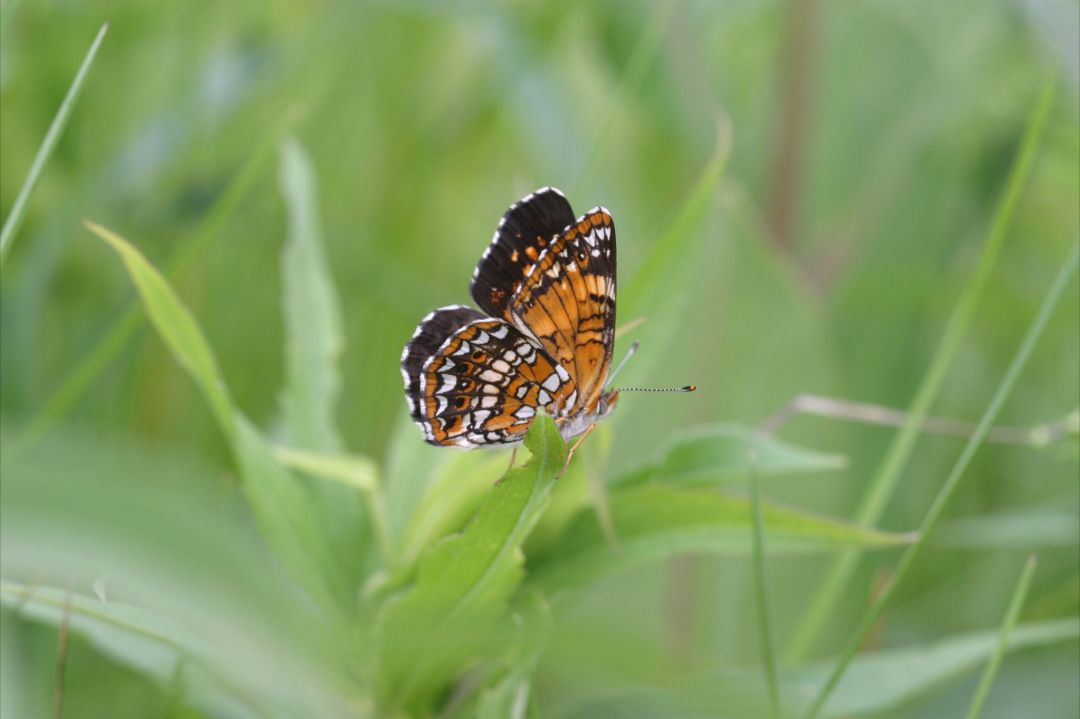
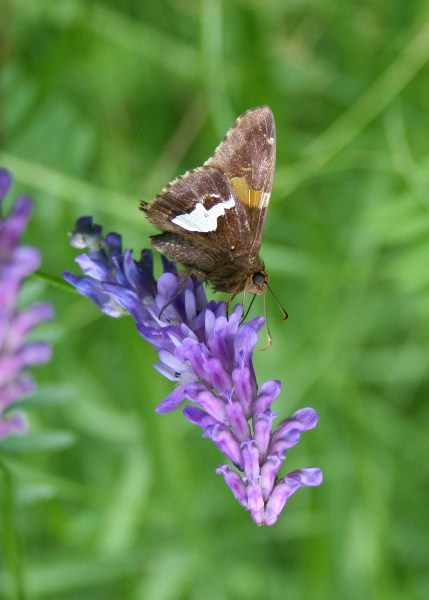
This year we opted for less strenuous travel, focusing instead on the lively woods and meadows south of Slide Lake. As the vast majority of the park has succeeded to second-growth and mature forest, the once plentiful meadow habitats that were created by early settlers have gone – except for a few small fields in the Slide Lake area. We found an abundance of insect and plant life in these fields, many of which we hadn’t recorded during previous biothons. Fortunately, our bug guru Seabrooke was on hand to sift through a seemingly infinite sea of invertebrates. Our results for moths and butterflies was considerably higher this year, which will be evident by the photo selection in this post!

Diversity of birds during the event was a little lower than in 2011, although this is more a reflection of the much smaller area coverage this year. Indigo Buntings are the dominant species in the meadow areas where they occupy scrubby woodland edges. Sightings of Blue-winged Warbler and Blue-headed Vireo were noteworthy and an evening nightjar concert was a highlight.

A session of skipper watching was interrupted when two of us caught a glimpse of a very young Black Bear in the meadow – another biothon first! Mammals are certainly the leanest group of species on an annual basis (6-8 species average) but we’ve not yet attempted any nocturnal trapping and or searching – perhaps next year.
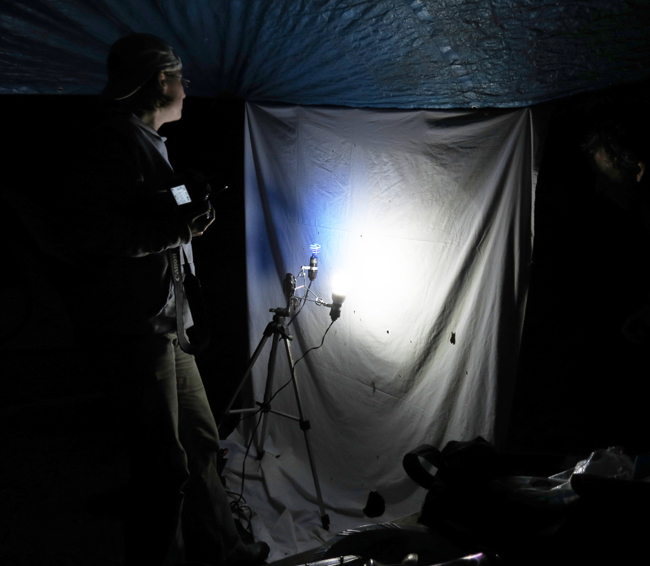
The weather on Saturday afternoon alternated between short periods of low dense cloud and sunshine with a moderate breeze. Luckily for us, the winds subsided enough to make for a decent session of mothing in the evening. A total of 77 species were counted in a couple of hours, which was considerably better than the previous year when the moth sheet rippled in the wind and light showers. Seabrooke reports that the best moth of the night was a Silver-spotted Ghost Moth – just her second ever!

This year’s biothon was another success – a productive 24 hours of counting and some much needed dollars raised for Frontenac Bird Studies! Our unofficial total of species counted for the 2012 biothon is 463, just a few shy of our final tally in 2011. It is remarkable how consistent our annual totals have been (431, 466, 463). With the completion of each biothon we make a substantial contribution to a cumulative database on species occurrence information for Frontenac Provincial Park – a valuable asset for Ontario Parks and Frontenac Bird Studies. Having just finished up our third consecutive we are now approaching 1000 species of flora and fauna identified by a small group of friends passionate about the land and its living things.
On behalf of the Migration Research Foundation I wish to extend our thanks to this year’s many sponsors who donated to the three biothon teams. Of course, the whole event would not have been possible without the efforts of our dedicated volunteer biothoners; Chris Dunn, Steve Gillis and Seabrooke Leckie! Lastly, thanks to the following Ontario Parks staff for their continued support of Frontenac Bird Studies and the Frontenac Biothon fundraiser; Corina Brdar, Peter Dawson and Bert Korporaal. Special thanks to Ken and Vera Shepherd for allowing us access through their beautiful farm for the biothon this year.
Below is a small selection of species recorded during this year’s biothon – hope you enjoy!


 Frontenac Bird Studies