2012 Frontenac Biothon Results

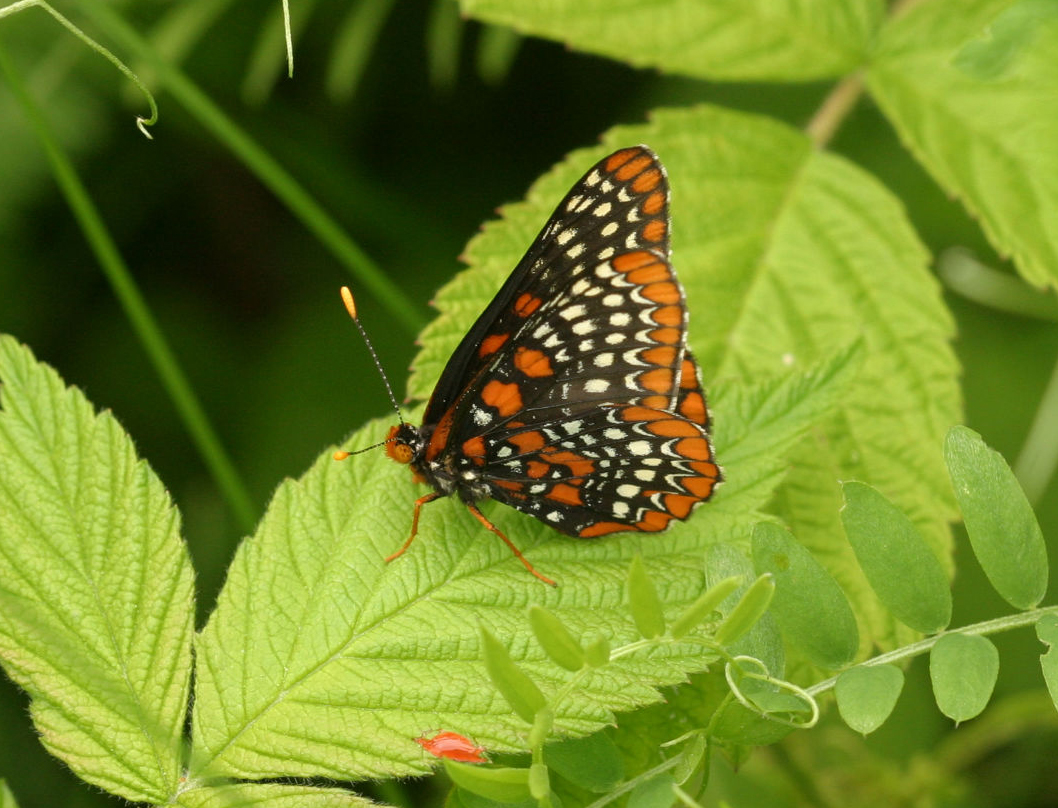
Baltimore Checkerspot (Chris Dunn)

Our annual Frontenac Biothon was held the weekend of June 9-10, 2012. We were rather nervous about the unstable weather forecast for the weekend but we managed to stay relatively dry and comfortable for the 24-hour blitz. During the inaugural biothon in 2010 we tallied a respectable 431 floral and faunal species in the Big Clear Lake area in the northeast zone of Frontenac Provincial Park. Last year we conducted an extensive tour spanning the rock barrens in the southeast to more mature forest habitats closer to the northwest section of Frontenac. In all, 466 species were identified in 2011. Results from both years combined comprise 727 unique species identified within the boundaries of the park!

Arctic Skipper (Seabrooke Leckie)

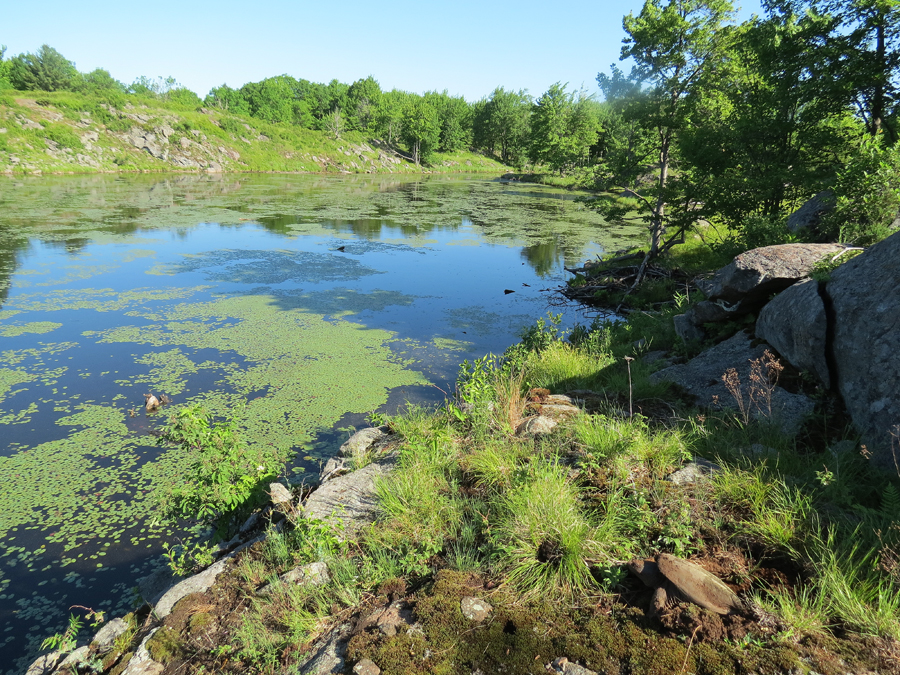
This year we opted for less strenuous travel, focusing instead on the lively woods and meadows south of Slide Lake. As the vast majority of the park has succeeded to second-growth and mature forest, the once plentiful meadow habitats that were created by early settlers have gone – except for a few small fields in the Slide Lake area. We found an abundance of insect and plant life in these fields, many of which we hadn’t recorded during previous biothons. Fortunately, our bug guru Seabrooke was on hand to sift through a seemingly infinite sea of invertebrates. Our results for moths and butterflies was considerably higher this year, which will be evident by the photo selection in this post!

Indigo Bunting (D.Derbyshire)

Diversity of birds during the event was a little lower than in 2011, although this is more a reflection of the much smaller area coverage this year. Indigo Buntings are the dominant species in the meadow areas where they occupy scrubby woodland edges. Sightings of Blue-winged Warbler and Blue-headed Vireo were noteworthy and an evening nightjar concert was a highlight.

Young Black Bear (D.Derbyshire)

A session of skipper watching was interrupted when two of us caught a glimpse of a very young Black Bear in the meadow – another biothon first! Mammals are certainly the leanest group of species on an annual basis (6-8 species average) but we’ve not yet attempted any nocturnal trapping and or searching – perhaps next year.
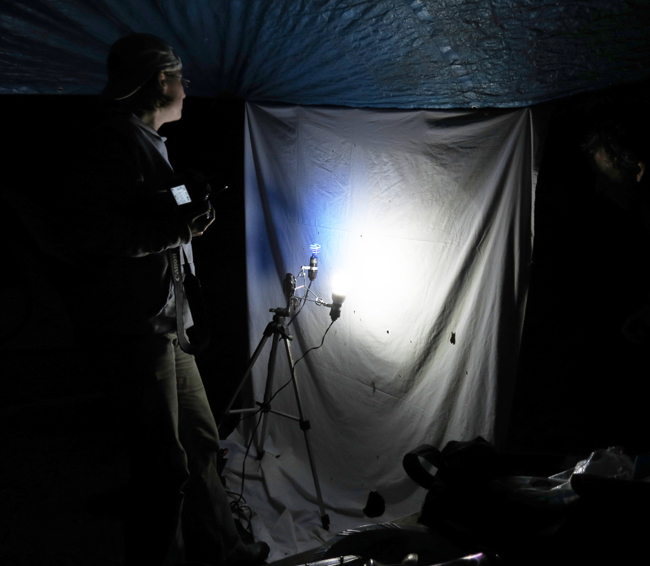
Moth Lights (D.Derbyshire)

The weather on Saturday afternoon alternated between short periods of low dense cloud and sunshine with a moderate breeze. Luckily for us, the winds subsided enough to make for a decent session of mothing in the evening. A total of 77 species were counted in a couple of hours, which was considerably better than the previous year when the moth sheet rippled in the wind and light showers. Seabrooke reports that the best moth of the night was a Silver-spotted Ghost Moth – just her second ever!

Silver-spotted Ghost Moth (Seabrooke Leckie)

This year’s biothon was another success – a productive 24 hours of counting and some much needed dollars raised for Frontenac Bird Studies! Our unofficial total of species counted for the 2012 biothon is 463, just a few shy of our final tally in 2011. It is remarkable how consistent our annual totals have been (431, 466, 463). With the completion of each biothon we make a substantial contribution to a cumulative database on species occurrence information for Frontenac Provincial Park – a valuable asset for Ontario Parks and Frontenac Bird Studies. Having just finished up our third consecutive we are now approaching 1000 species of flora and fauna identified by a small group of friends passionate about the land and its living things.

On behalf of the Migration Research Foundation I wish to extend our thanks to this year’s many sponsors who donated to the three biothon teams. Of course, the whole event would not have been possible without the efforts of our dedicated volunteer biothoners; Chris Dunn, Steve Gillis and Seabrooke Leckie! Lastly, thanks to the following Ontario Parks staff for their continued support of Frontenac Bird Studies and the Frontenac Biothon fundraiser; Corina Brdar, Peter Dawson and Bert Korporaal. Special thanks to Ken and Vera Shepherd for allowing us access through their beautiful farm for the biothon this year.

Below is a small selection of species recorded during this year’s biothon – hope you enjoy!
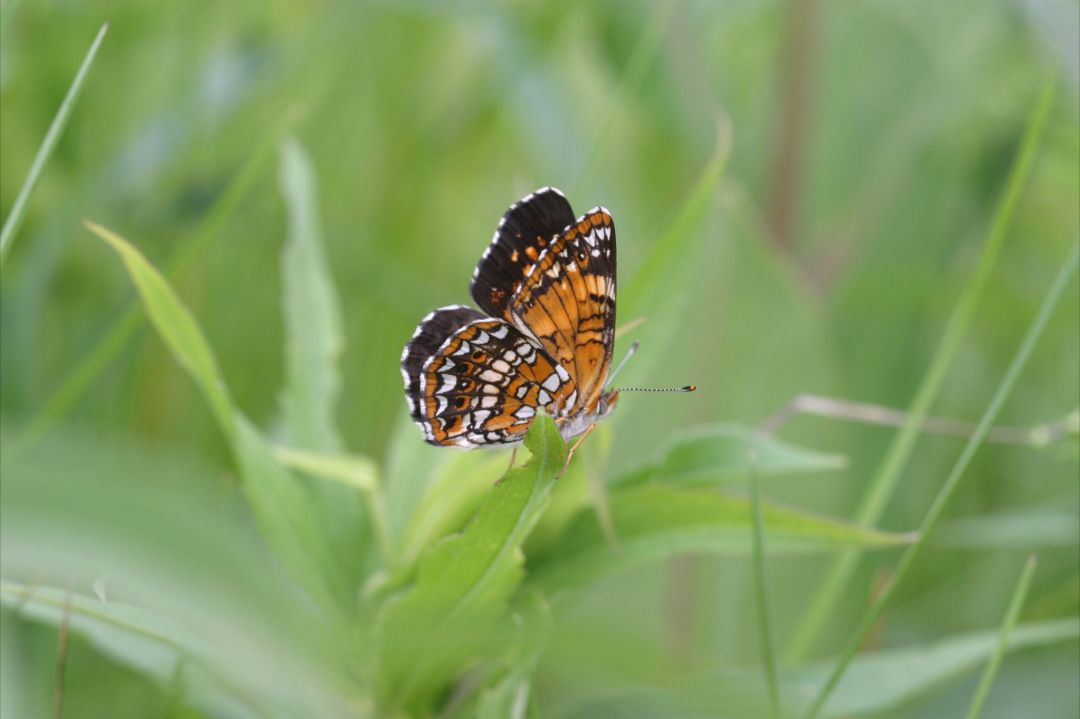
Harris’s Checkerspot (Chris Dunn)
Marsh Bluet (Seabrooke Leckie)
Spotted Thyris/Raspberry (Seabrooke Leckie)
Ophioninae (D.Derbyshire)
Baltimore Checkerspot chrysalis (D.Derbyshire)
Rock Sandwort (D.Derbyshire)
Rose Pogonia (Chris Dunn)
Northern Cloudywing/Cow Vetch (Chris Dunn)
Calico Pennant (Seabrooke Leckie)
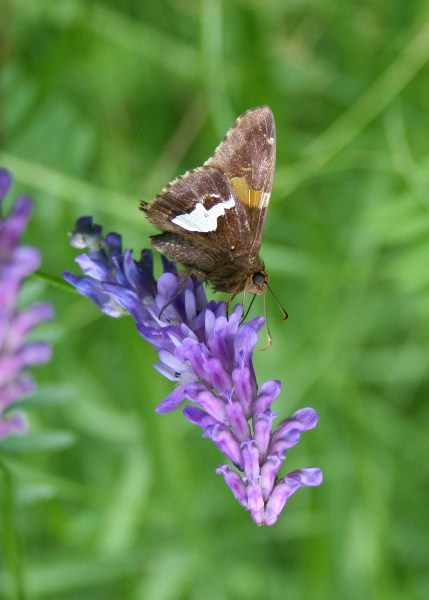
Silver-spotted Skipper/Cow Vetch (Seabrooke Leckie)

Biothon Is This Weekend!

Eight-spotted Forester

Our annual Frontenac Biothon event will be held this weekend, June 9-10, 2012, in Frontenac Provincial Park.

The Frontenac Biothon was created to raise important funds for our work and make a beneficial contribution to science and conservation at the same time. Held annually in June or July, the Frontenac Biothon is a sponsored event where three teams of naturalists identify as many species as possible within an allotted 24-hour period. Since the inaugural event in 2010, over 700 species have been identified in Frontenac Provincial Park, which includes nearly 600 species of plants and invertebrates! These exhaustive searches have also led to some significant discoveries including occurrence records for many regionally rare species and designated Species at Risk.

This year our teams will take to the woods, meadows and lakes on June 9-10, 2012. Our biologists will be identifying all plants, mammals, birds, amphibians, reptiles and insects encountered but will have a specific focus on rare species and designated Species at Risk.

How you can Help

While our biothon teams have all the fun battling bugs, swamps and steep terrain – it’s the sponsors that make the event happen! Frontenac Bird Studies is a program of the Migration Research Foundation – a registered charitable organization in the U.S and Canada. All sponsors receive a tax-creditable receipt for donations over $10. You can sponsor the Frontenac Biothon by mail (see below for details) or online through Paypal. 100% of donations will go directly to support FBS programs.

Sponsor a Biothon Team

Seabrooke Leckie & Dan Derbyshire

.
Julia Marko Dunn & Chris Dunn

.
Steve Gillis & Karina Dykstra

You can also sponsor the biothon by cheque through regular mail. Please complete the cheque to Migration Research Foundation Inc. Simply include the name of the biothon participant you wish to sponsor on the memo line of the cheque and send the envelope to our address below.

Frontenac Bird Studies
2386 Bathurst 5th Concession
RR7, Perth, ON.
K7H 3C9

Thank you to all of this year’s biothon sponsors!

Deep Forests and Small Farms

Barred Owl along Salmon Lake Road

Fieldwork has kicked into full gear as the action-packed month of June is just a week away. Our Louisiana Waterthrush surveys are nearing completion for the 2012 season. Soon I will be racking up the mileage while scouring the barrens for Prairie Warblers and other goodies in the southeast section of the park. It’s such a wonderful contrast to transition from damp mature forests to the hot and dry expanses of bedrock, poverty grass and junipers. Yesterday I found this Barred Owl in a wooded swamp about 40m from where my truck was parked on Salmon Lake Road. Barred Owls are easily the most common owl species in the area. Great Horned Owls are comparatively rare in the hardwood forests but are found with some regularity in mature mixed coniferous zones. Owl populations would be an excellent subject FBS in the future.

Violets in Arab Gorge

Louisiana Waterthrushes have been very scarce this spring, even more so than last year. The species was recorded at seven sites in 2010, our first year, but only evident at two sites so far in 2012. Fortunately, they are paired and probably nesting at the two sites. The steep sided stream corridors seem so empty without their voices.

Nesting Black-throated Green Warbler

Many species are well into their nesting cycles. While observing the Barred Owl I tracked a female Black-throated Green Warbler, which had just finished bathing in the swamp. After a bit of preening and some flitting it plunked itself into a fork at the main trunk of a young Yellow Birch. Raising binoculars to the spot revealed a surprisingly deep and bulky nest. The earliest nest record for this species in Ontario is June 5 so a nest with eggs on May 24 is quite early. This particular record is also somewhat unusual in its location in a deciduous tree species within purely deciduous forest. In Frontenac Provincial Park the Black-throated Green is more typically found in woodland with tall Eastern White Pine and/or Eastern Hemlock. However, a quick search of our point count data revealed that they are present, albeit in low numbers, within hardwood stands as well.

Female incubating

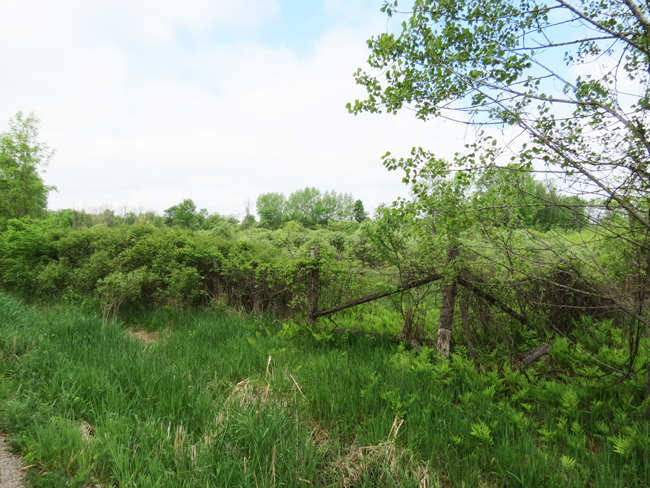
Below is a photo of habitat suitable for Golden-winged Warblers. This was taken just southwest of Westport, ON where there are many small, family-run farms with low-intensity agricultural practices. The presence of dense shrub cover at edges of property lines provides appropriate conditions for Golden-wings, which were designated as Threatened by COSEWIC in 2006. A total of six male Golden-winged Warblers were located yesterday morning with relatively little effort. The Frontenac Arch and the southern shield ecotone are important regions for the protection of this species. In these areas, the rugged terrain and shallow till have been effective deterrents to large scale/intensive agriculture, so far…..

Golden-winged Warbler habitat near Westport, ON
Golden-winged Warbler at MABO, 2011