News and Articles

Report on Frontenac Biothon 2011

Six-spotted Tiger Beetle (Seabrooke Leckie)

The second annual Frontenac Biothon was held on June 11-12 in various locations at Frontenac Provincial Park. The inaugural biothon in 2010 was a terrific event – full of interesting observations and we raised some much needed funds for Frontenac Bird Studies at the same time. Last year we compiled a total of 441 species, just shy of our target of 500 for the 24-hour blitz. This year we took to the park with a handicap as our plant guru was home with a recently hatched baby girl! We knew we had to step our game up and I’m happy to report that we did just that.

The 2011 biothon was a sort of grand tour for three of us. Chris, Steve and yours truly logged over 22 kilometres of hiking in just over 24 hours. We visited the abandoned farmlands and rock barrens in the park’s southeast corner, traveled some of the park’s main artery along Big Salmon Lake and also biothoned the length of Moulton Gorge, which took us to the mature forests of the park’s northern region.
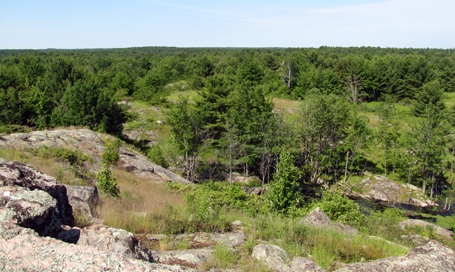
Rock Barrens near Flagpole Hill (Derbyshire)

All the effort paid off as we visited some markedly different zones. In the rock barrens we found unique plants and insects, Prairie Warblers, a Sandhill Crane and a singing Yellow-bellied Flycatcher. The crane and the flycatcher were highly unusual summer records for the park!
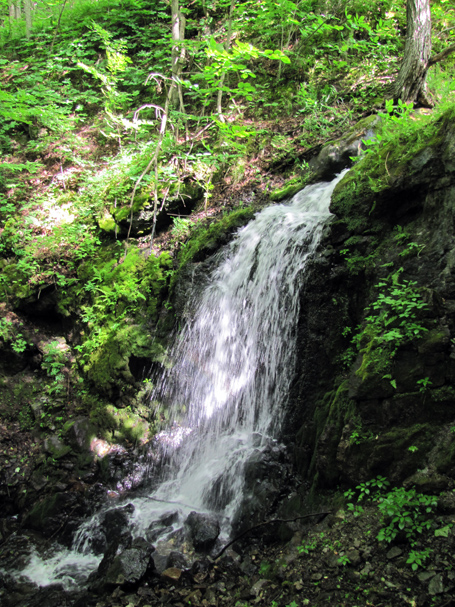
Waterfall near Moulton Gorge

The mature forests were a little more comfortable for hiking due to the shade and cooler temperatures. The diversity here was very high. The highlight for me was the Woodland Jumping Mouse that we startled near a waterfall – a fantastic creature. The excursion concluded with the observation of Cerulean Warblers and Louisiana Waterthrushes feeding young – two Species at Risk successfully raising young within 75m of eachother!
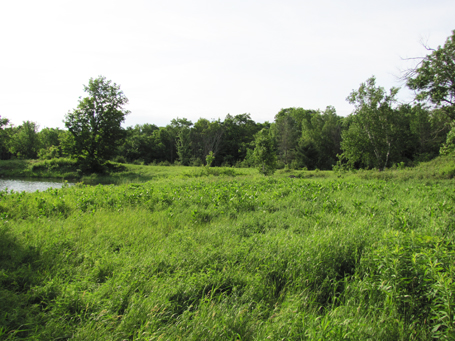
Meadows south of Slide Lake (Derbyshire)

And finally, actual meadow habitat! Lush wet meadows are very rare in Frontenac Provincial Park as nearly all of the abandoned homesteads and farms have returned to forest. The plant and insect life in these meadows south of Slide Lake was exceptional. It was great to have Chris and Steve there to help me sort through the all the non-avian species. Indigo Buntings and Chestnut-sided Warblers seemed to be most abundant during our stay but I’ll have to return another time for a more thorough search for grassland bird species.

Meanwhile, during all of our exhaustive hiking and paddling, Seabrooke was quietly racking up nearly 350 species just at her station near Campsite 6 on Little Salmon Lake! Seabrooke probably considers herself an insect specialist but is a very well-rounded naturalist, too. By the end of the biothon we had recorded 166 species of insects. Dragonflies and butterflies were much more evident this year than last and we still managed to ID a small selection of nocturnal moths despite the wind and rain that moved in during the evening of 11th. Our totals were a little higher for all taxa in 2011 with the exception of moths and fungi/lichens. The lower diversity in both of these groups is due to weather (moths) and event timing (fungi). We are still working on a few identifications but at present our total for Frontenac Biothon 2011 stands at 468, which is 27 species higher than last year. While not quite the 500 mark, our list for 2011 was quite an achievement given that we were missing a key team member and that the weather severely limited our mothing production. Much like our biothon from a year ago we found some truly great stuff, had an adventure and supported the FBS program to boot – all things that make the biothon a great event!

On behalf of the Migration Research Foundation I wish to extend our thanks to this year’s many sponsors who donated to the three biothon teams. Of course, the whole event would not have been possible without the efforts of our dedicated volunteer biothoners; Chris Dunn, Steve Gillis and Seabrooke Leckie! Lastly, thanks to the following Ontario Parks staff for their continued support of Frontenac Bird Studies and the Frontenac Biothon fundraiser; Corina Brdar, Peter Dawson and Bert Korporaal.

Below is a small selection of species recorded during this year’s biothon – hope you enjoy!
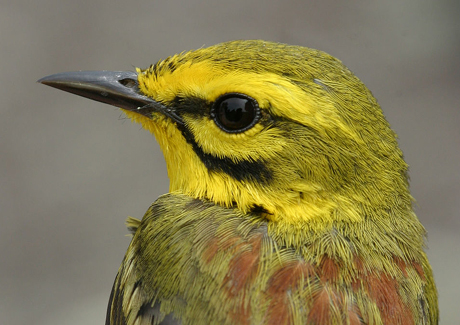
Prairie Warbler (Chris Dunn)
Sawfly larvae (Seabrooke Leckie)
Silver-bordered Fritillary
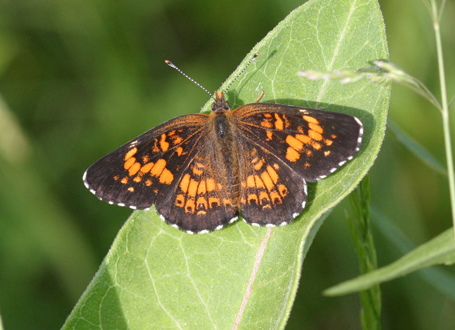
Harris’s Checkerspot (Chris Dunn)

A boreal bird in Frontenac

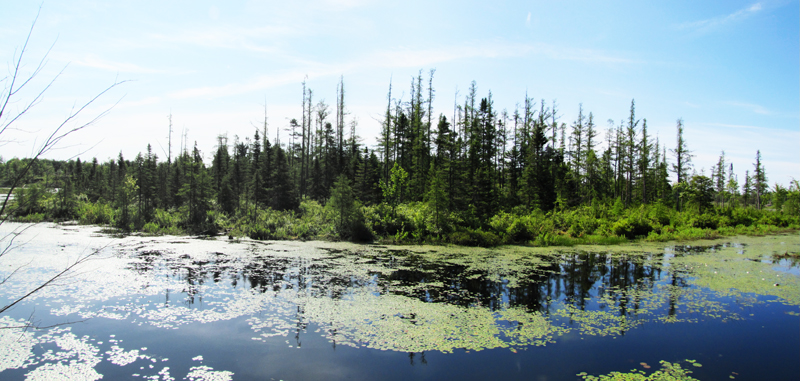
Spruce/tamarack bog in Frontenac (click to zoom)
Yellow-bellied Flycatcher (Seabrooke Leckie)

Lots of updates to share but no time or energy to write anything at length. However, I couldn’t resist sharing news from this morning of a territorial Yellow-belled Flycatcher (Empidonax flaviventris) , which sang constantly from a good size Black Spruce/Tamarack bog in Frontenac Provincial Park. The water surrounding the bog is quite deep and probably full of monsters so I didn’t venture into the bog itself – though I did seriously consider crafting some sort of crude watercraft for the short passage. This would be the first breeding record for the park and one of only a handful for the entire Kingston region. Yellow-bellied Flycatchers are a true northern breeder, preferring moist boreal forest and peatland for nesting. I’ll have to add this to our ever expanding to-do list for Frontenac Bird Studies!

M.A.P.S Visit 1 – 2011

Eastern Towhee at Rock Ridge (Seabrooke Leckie)

In addition to all the stream hopping, nest searching, colour banding and biothon-ing, we are also well into our third consecutive season of the Monitoring Avian Productivity & Survivorship (MAPS) program. Our three stations have been a wellspring of data and ideas for the FBS program and a fundamental monitoring scheme for measuring the health and viability of local breeding bird populations. We launched the stations in 2009 and were pleased to find high numbers of adults at the sites. However, unusually wet and/or cold conditions in late spring/early summer of that year and again in 2010 appeared to contribute to low productivity (nest success) for two consecutive breeding seasons. This has been backed up by an apparent high nest failure rate detected by our nest searching efforts in both years. We hoped that things would begin to turn around in 2011 but unfortunately our results from the first of seven visits this year indicates record low numbers of adults – not unexpected given the lackluster output of young birds into the population in the preceding two years.

Blue Lakes (BLAK)

We began the season on June 4 at BLAK and found a mostly quiet woodland – far from the exuberant activity of even a year ago. We ended the day having captured just 10 individuals, although four of these were returns from previous years, which gave us some encouragement. For comparison we captured 24 individuals here during visit 1 on June 8, 2010. Numbers were down for most species with Red-eyed Vireo, Ovenbird, Black-throated Blue Warbler and Veery being the most lacking.

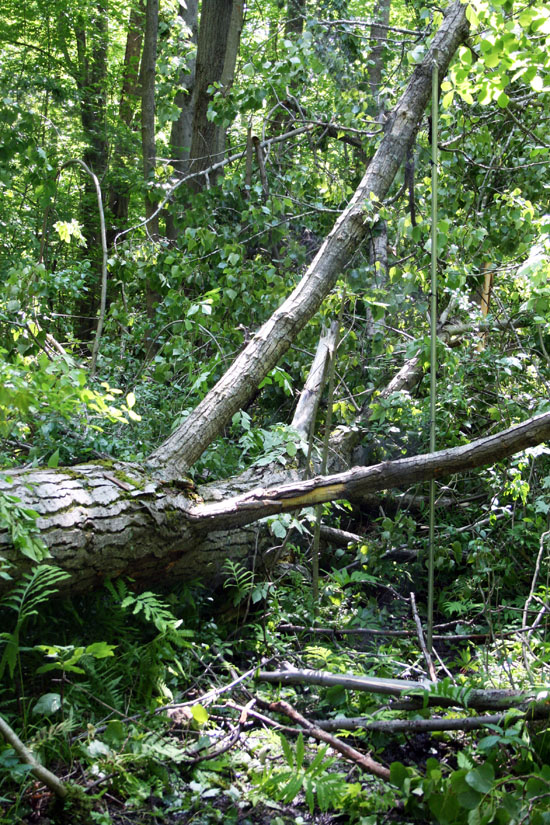
Big Poplar down at Net 8, MABO (S.Leckie)

Rock Ridge (RRID)

On the following day, June 5, 2011, we made our way to Rock Ridge in Frontenac Provincial Park. Once again, overall bird activity was considerably lower than in previous years, especially in the forest interior. A total of 10 birds were captured – again with 4 returns. This total is identical to that for visit 1 in 2010 but significantly lower than the 25 recorded in 2009. Black-and-white Warbler, Red-eyed Vireo, Scarlet Tanager and Field Sparrow are the species that seem to have declined here most heavily.

Male Yellow-bellied Sapsucker at BLAK (S.Leckie)

Maplewood Bog (MABO)

Our final stop for round one was to Maplewood Bog (MABO), which tends to be our busiest of the three stations. We captured 26 birds here during visit 1 in 2009, followed by 21 in 2010. After six hours of banding we arrived at, remarkably, yet another tally of 10 individuals!! We banded just four new birds and recaptured six returning individuals from previous years. The woods, once so abundant with thrushes, vireos and tanagers, were very quiet indeed.

Chestnut-side Warbler at BLAK (S.Leckie)

Our data from the MAPS program and our other studies appear to indicate a widespread downward trend in forest bird populations in the FBS study area since 2009. Factors driving populations are highly complex so we won’t be sounding any alarm bells or hitting the panic button just yet. Also, we know that populations are subject to periodic highs and lows in sync with naturally occurring but variable weather phenomena. We expect (and hope) that bird numbers will be gradually restored following breeding seasons with more favourable weather. Speaking of weather, the MAPS program is very well positioned to shed light on effects of climate change on breeding birds at the landscape, regional and even broader scales. It is unfortunate that there are so few MAPS stations in Ontario as it would be instructive to compare regional patterns and trends in vital rates in anticipation of shifting climate “normals”. All of this being said, there is still six more visits to each station in 2011 and a great deal more to learn.

Prairie Warbler colour banding begins

Male Prairie Warbler (Dendroica discolor)

It will have to be another brief update for today. I suspect I won’t be back to more lengthy writings until late June or early July when things begin to ease up – I’m pretty swamped with fieldwork right now. One of the major tasks at hand is our continuing studies of Prairie Warblers in Frontenac Provincial Park. After 13km of combined paddling and hiking I managed to capture and band one of the isolated males this morning!

Most of the Prairie Warblers occupy the most barren of the rock barrens and are loosely colonial but there are a few singletons holding court in smaller patches of suitable habitat. This particular individual is maintaining a territory about 3km away from the core breeding area. His territory is quickly regenerating and it is possible that the habitat will become unsuitable within the next decade due to natural succession. It seems that some individuals have already abandoned this neighbourhood as the scrubby ridge formerly hosted as many three males as recently as 2009. Fortunately the “core” breeding area is very much intact and will remain so for many years to come. Below is a photo depicting the territory of the above male. Stay tuned for more updates…