The 2012 season of our Frontenac Breeding Birds program is officially wrapped. All reports and data have been submitted and our attention has already shifted to 2013. We are particularly excited about this upcoming season, our fifth, as we will be turning our attention to new subjects after having just completed three consecutive years of monitoring Louisiana Waterthrush and Prairie Warbler. We will reveal our plans in the coming months once our preparations are completed.
A big thanks are due to all of our readers, sponsors and friends who continue to make FBS possible!
Our fourth consecutive season of Monitoring Avian Productivity & Survivorship (M.A.P.S) is well underway; nearly half finished, actually. We’ve now completed our third of seven visits to each station. As previously discussed results from our first three years of M.A.P.S indicated a sharp, incremental decline in abundance and diversity of terrestrial avifauna in Frontenac woodlands and rock barrens since 2009. The breadth and severity of the decline was foremost in our minds as we walked the trodden paths from usual empty net to empty net in 2011. Hope springs eternal and a new season began in early June 2012. Below is an update on this year’s results to date for Maplewood and Rock Ridge.
Maplewood (MABO)
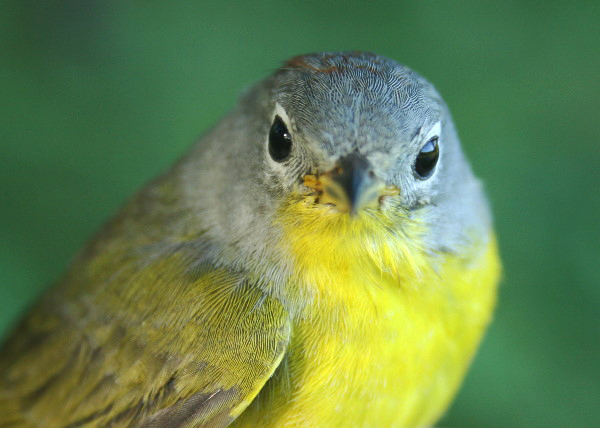
Nashville Warbler (S.Leckie)
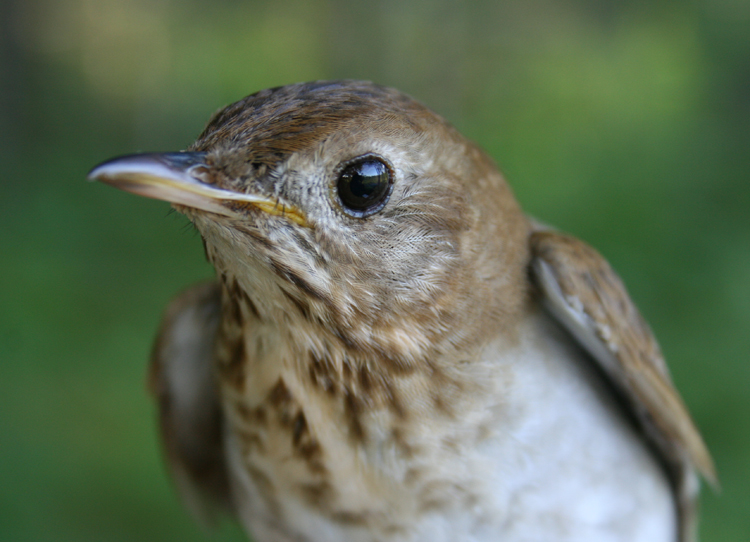
First the good news. Numbers of birds are up from last year at MABO, although still considerably lower than in 2009. For comparison, in 2009 we captured 91 birds total through visits 1-3 (72 new/19 rec) while we’ve captured 60 (39 new/21 rec) for the same period in 2012. Very pleased to see that Nashville Warblers and Northern Waterthrushes have returned to the site. We banded a whopping eight Northern Waterthrushes here in 2009 but didn’t even hear or see one a year ago. We’ve banded two adults of each species so far in 2012. Annual totals of Veery and Wood Thrush have been relatively consistent in abundance since 2009 and have returned in expected numbers again this year. Two new species have been recorded for the site; a singing Brown Creeper was detected on June 7 and White-throated Sparrows have been recorded singing on each visit. Notable absentees so far include cuckoos, Hermit Thrush and Field Sparrow.
It’s been a strong year for Yellow-rumped Warblers at MABO. I’ve also observed an unusually high number of adults feeding fledged young in Frontenac Provincial Park this spring/summer – good signs for this northern species in the region. While it’s still too early to judge this M.A.P.S season at MABO, with less than half of the work completed, we are seeing some positive signs of a possible rebound. Weather conditions have been closer to normal during this breeding season than any previous season since our studies began.
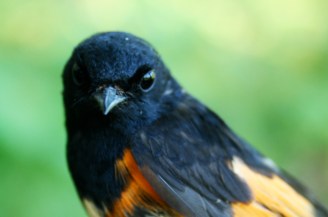
American Redstart (S.Leckie)
American Redstarts are one of the most commonly sampled species at MABO, although they are infrequent nesters within the station boundaries proper. They mainly occupy habitats at the edges of the station but we do manage to capture them later on in the summer when adults and young disperse. In 2009 at least two pairs nested along the shrubby perimeters of small wetlands within the station but they’ve not returned since. Gorgeous bird – one of my favourites.
Rock Ridge (RRID)
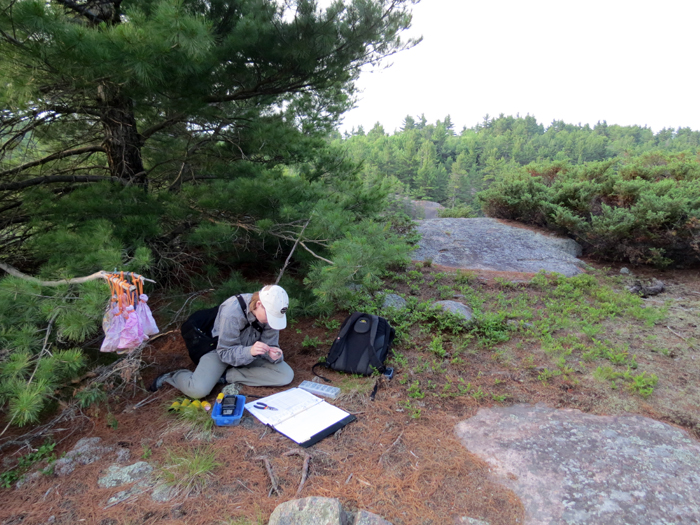
Processing captured birds at Rock Ridge
While things seem promising at MABO, the same cannot be stated for Rock Ridge (RRID) where numbers are a little down from last season and at least a few species seem to be struggling: most notably Eastern Towhee and Field Sparrow. Both are species of conservation concern due to significant negative trends evident in continental BBS and MAPS data. At our stations these species have consistently decreased in abundance annually since 2009. Urban expansion and changing rural landuse practices seem to be the most commonly suggested causes for the declines in both species, although these issues are less applicable in our region. On the other hand, White-throated Sparrows appear to have rebounded nicely after a near no-show in 2011. Also, the only Pine Warbler that we’ve banded during M.A.P.S was spotted feeding fledged young on June 28, 2012. The bird was originally banded as an immature male on July 18, 2010.
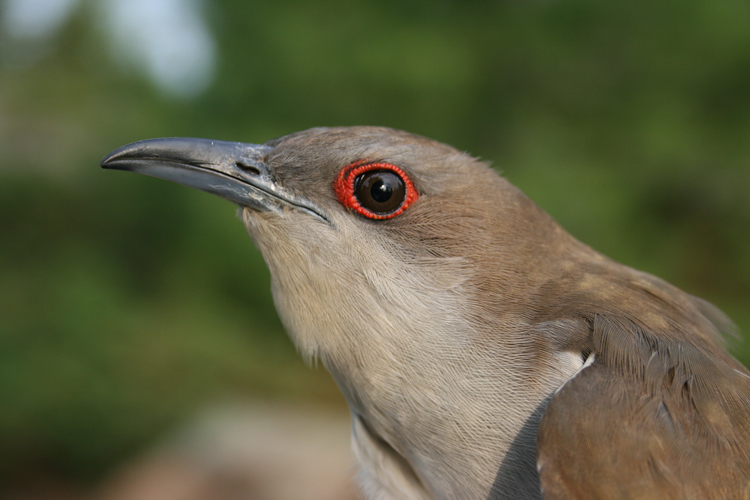
Black-billed Cuckoo (S.Leckie)
2011 was not a good year for cuckoos. For the first time we failed to capture one during a M.A.P.S season. This Black-billed was a welcome capture on June 18, 2012 at RRID. However, their numbers are clearly down from our first two seasons. This is true for most species at the station – present but substantially fewer in number. Rock Ridge begins to shine in July when birds abandon territories in search of food with their young so it will be interesting to see how the year will pan out at the station.
Our annual Frontenac Biothon was held the weekend of June 9-10, 2012. We were rather nervous about the unstable weather forecast for the weekend but we managed to stay relatively dry and comfortable for the 24-hour blitz. During the inaugural biothon in 2010 we tallied a respectable 431 floral and faunal species in the Big Clear Lake area in the northeast zone of Frontenac Provincial Park. Last year we conducted an extensive tour spanning the rock barrens in the southeast to more mature forest habitats closer to the northwest section of Frontenac. In all, 466 species were identified in 2011. Results from both years combined comprise 727 unique species identified within the boundaries of the park!
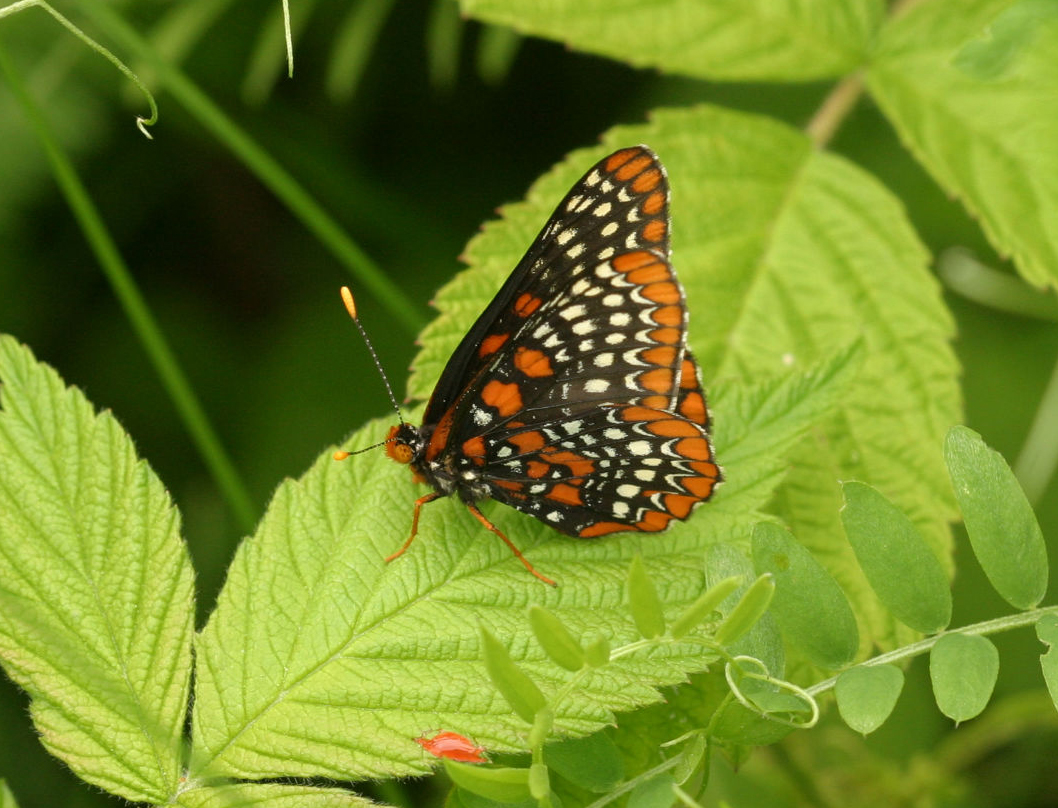
Arctic Skipper (Seabrooke Leckie)
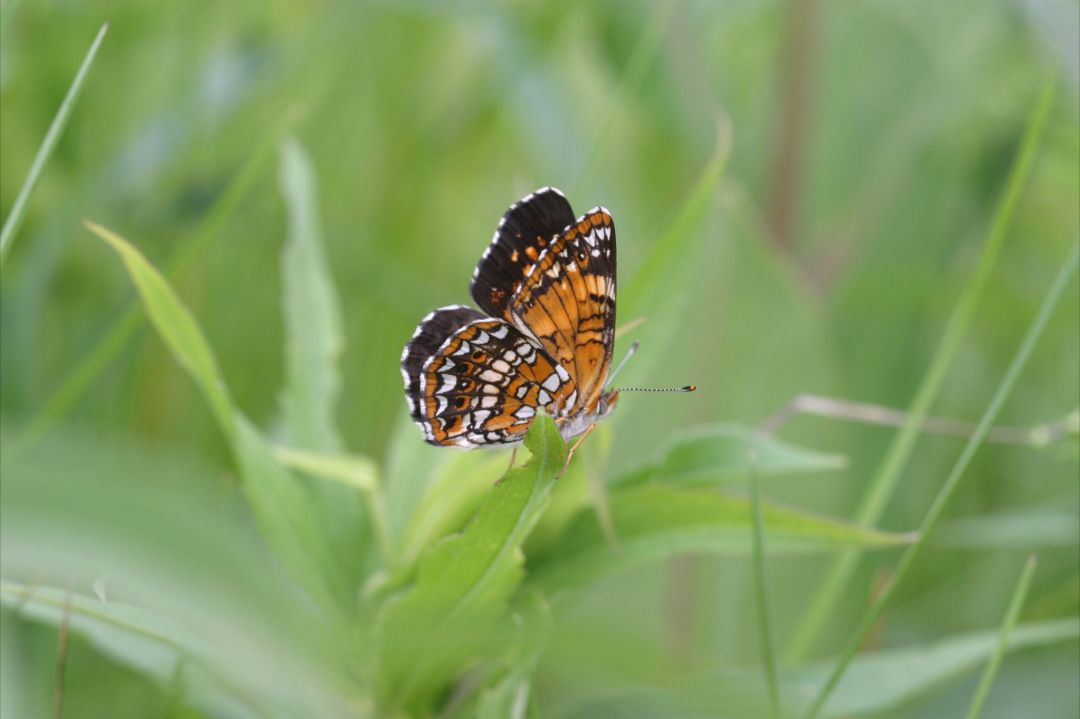
This year we opted for less strenuous travel, focusing instead on the lively woods and meadows south of Slide Lake. As the vast majority of the park has succeeded to second-growth and mature forest, the once plentiful meadow habitats that were created by early settlers have gone – except for a few small fields in the Slide Lake area. We found an abundance of insect and plant life in these fields, many of which we hadn’t recorded during previous biothons. Fortunately, our bug guru Seabrooke was on hand to sift through a seemingly infinite sea of invertebrates. Our results for moths and butterflies was considerably higher this year, which will be evident by the photo selection in this post!
Indigo Bunting (D.Derbyshire)
Diversity of birds during the event was a little lower than in 2011, although this is more a reflection of the much smaller area coverage this year. Indigo Buntings are the dominant species in the meadow areas where they occupy scrubby woodland edges. Sightings of Blue-winged Warbler and Blue-headed Vireo were noteworthy and an evening nightjar concert was a highlight.
Young Black Bear (D.Derbyshire)
A session of skipper watching was interrupted when two of us caught a glimpse of a very young Black Bear in the meadow – another biothon first! Mammals are certainly the leanest group of species on an annual basis (6-8 species average) but we’ve not yet attempted any nocturnal trapping and or searching – perhaps next year.
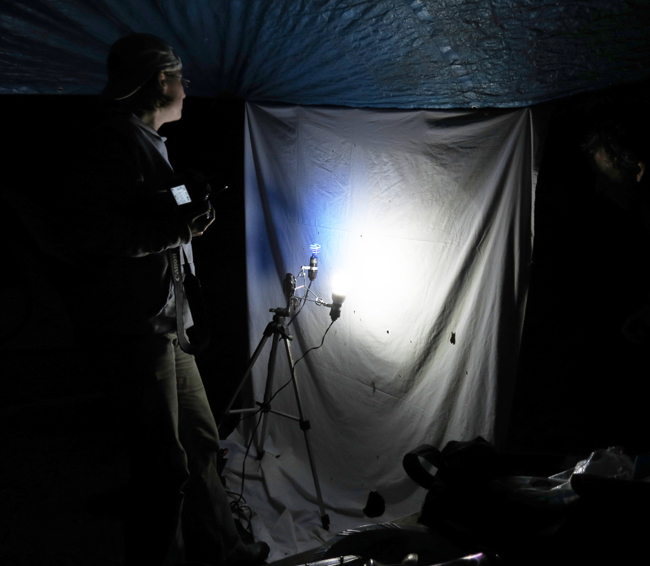
Moth Lights (D.Derbyshire)
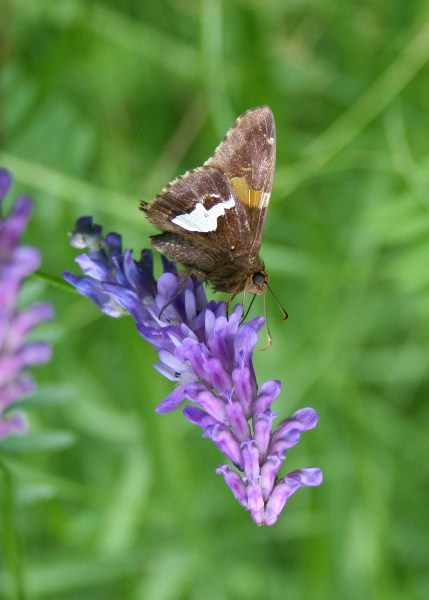
The weather on Saturday afternoon alternated between short periods of low dense cloud and sunshine with a moderate breeze. Luckily for us, the winds subsided enough to make for a decent session of mothing in the evening. A total of 77 species were counted in a couple of hours, which was considerably better than the previous year when the moth sheet rippled in the wind and light showers. Seabrooke reports that the best moth of the night was a Silver-spotted Ghost Moth – just her second ever!
Silver-spotted Ghost Moth (Seabrooke Leckie)
This year’s biothon was another success – a productive 24 hours of counting and some much needed dollars raised for Frontenac Bird Studies! Our unofficial total of species counted for the 2012 biothon is 463, just a few shy of our final tally in 2011. It is remarkable how consistent our annual totals have been (431, 466, 463). With the completion of each biothon we make a substantial contribution to a cumulative database on species occurrence information for Frontenac Provincial Park – a valuable asset for Ontario Parks and Frontenac Bird Studies. Having just finished up our third consecutive we are now approaching 1000 species of flora and fauna identified by a small group of friends passionate about the land and its living things.
On behalf of the Migration Research Foundation I wish to extend our thanks to this year’s many sponsors who donated to the three biothon teams. Of course, the whole event would not have been possible without the efforts of our dedicated volunteer biothoners; Chris Dunn, Steve Gillis and Seabrooke Leckie! Lastly, thanks to the following Ontario Parks staff for their continued support of Frontenac Bird Studies and the Frontenac Biothon fundraiser; Corina Brdar, Peter Dawson and Bert Korporaal. Special thanks to Ken and Vera Shepherd for allowing us access through their beautiful farm for the biothon this year.
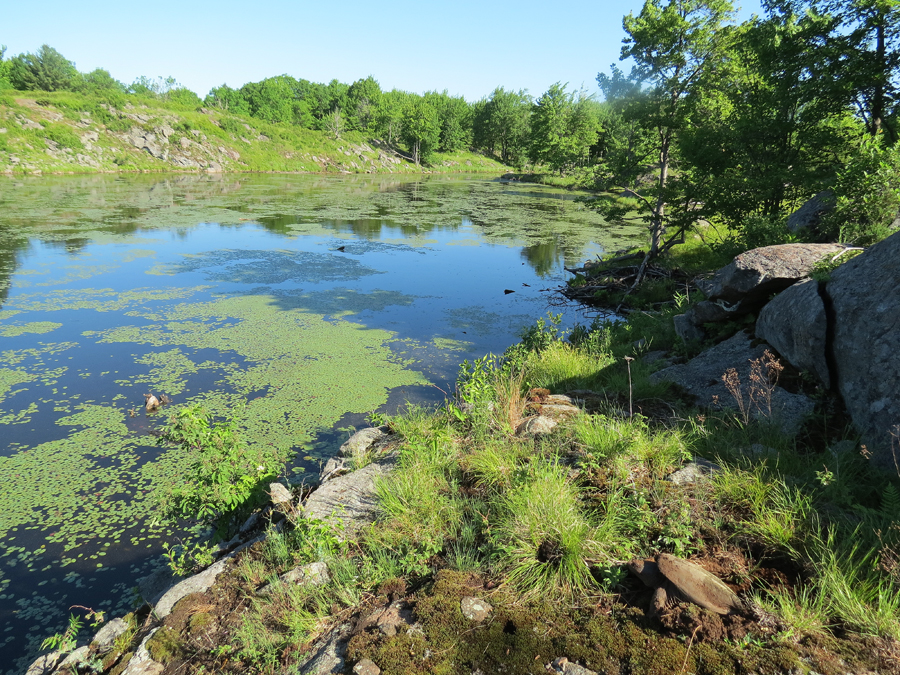
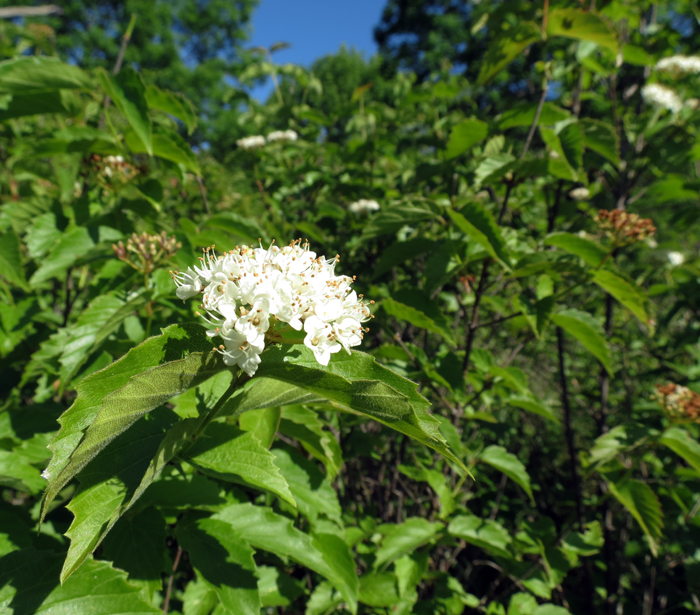
Below is a small selection of species recorded during this year’s biothon – hope you enjoy!
Our annual Frontenac Biothon event will be held this weekend, June 9-10, 2012, in Frontenac Provincial Park.
The Frontenac Biothon was created to raise important funds for our work and make a beneficial contribution to science and conservation at the same time. Held annually in June or July, the Frontenac Biothon is a sponsored event where three teams of naturalists identify as many species as possible within an allotted 24-hour period. Since the inaugural event in 2010, over 700 species have been identified in Frontenac Provincial Park, which includes nearly 600 species of plants and invertebrates! These exhaustive searches have also led to some significant discoveries including occurrence records for many regionally rare species and designated Species at Risk.
This year our teams will take to the woods, meadows and lakes on June 9-10, 2012. Our biologists will be identifying all plants, mammals, birds, amphibians, reptiles and insects encountered but will have a specific focus on rare species and designated Species at Risk.
How you can Help
While our biothon teams have all the fun battling bugs, swamps and steep terrain – it’s the sponsors that make the event happen! Frontenac Bird Studies is a program of the Migration Research Foundation – a registered charitable organization in the U.S and Canada. All sponsors receive a tax-creditable receipt for donations over $10. You can sponsor the Frontenac Biothon by mail (see below for details) or online through Paypal. 100% of donations will go directly to support FBS programs.
You can also sponsor the biothon by cheque through regular mail. Please complete the cheque to Migration Research Foundation Inc. Simply include the name of the biothon participant you wish to sponsor on the memo line of the cheque and send the envelope to our address below.
Three Question Marks (Polygonia interrogationis) at sap wellsEgg laying Snapping Turtle (Chelydra serpentina)Flowering arrowwood (Prairie Warblers love this stuff)Bats were heard calling from their roosts in this slab of bedrock!










 The
The 



 Frontenac Bird Studies