The Big Picture: Point Counts Then and Now

IMG_0961
Point Count on Canoe Lake Road – June, 2013

For us, 2013 will be remembered as the year of the point count. We’ve now finished up the last of a whopping 260 stations. This includes our own established suite of 164 on and offroad stations but also a new set conducted for our collaborative assessment of Cerulean Warblers with Bird Studies Canada. We’ve yet to enter and mine the data but a few things are clear: a) an overall decline in forest bird abundance has occurred; b) trends are positive for some species but negative for more; and c) You can almost always count on a Red-eyed Vireo or two to liven up a survey!

From 260 Point Count surveys this summer, a total of 576 Red-eyed Vireos were tallied. So often we tend to focus on less prodigious species and those showing signs of decline. However, the stability and ubiquity of the Red-eyed Vireo in the Americas is compelling and worth appreciating. Here at home in the Frontenac Arch they seem to be thriving in forests where others have thinned out if not vanished altogether. This round of surveys struck a note – these are prolific, feisty, robust survivors serving an important ecological role in hardwood forests. They are also the current record-holder amongst world bird species for most songs in a day – 20,000!

IMG_0980
Sugar Maple – Red Oak Stand near Birch Lake

I’m beginning to let go of the notion of “normal” with respect to weather. We’re now in the middle of our fifth spring/summer season and we’ve yet to have a complete season without at least one extended period of extreme conditions. This year has been “abnormally” wet. In fact, water levels have never been so high since we began our studies in 2009. This boom and bust weather must take something of a toll on breeding bird productivity. Cerulean Warblers are clearly down from levels detected in 2009 and we’ve talked at length in the past in a similar vein regarding Louisiana Waterthrush and Prairie Warbler. However, the picture isn’t quite so gloomy across the board. A number of species are actually up from previous years including Blackburnian Warbler and Brown Creeper. It will be very interesting to dive into the data in the coming months to get a better handle on what’s happening – stay tuned for more details in the future.
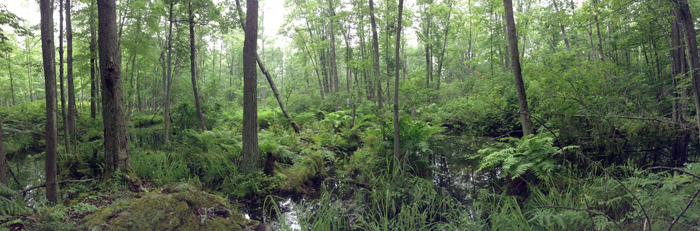
IMG_0971
Sugar Maple – Ash – Ironwood Stand near Big Salmon
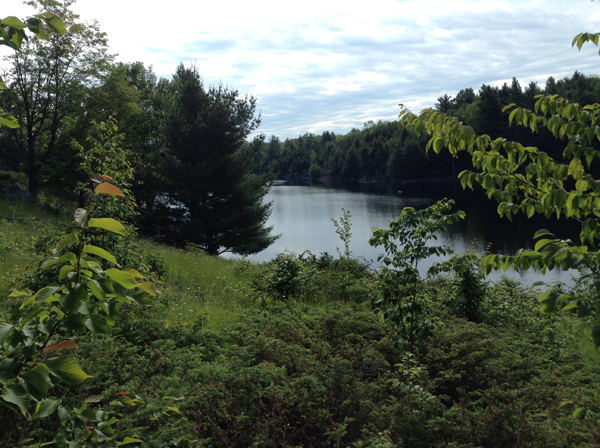
IMG_0918
Arkon Lake

Frontenac Avian Atlas Fundraiser – June 23-24, 2013

faad
.
Frontenac Bird Studies (FBS) is a program of Migration Research Foundation, an incorporated non-profit organization committed to bird research, monitoring and protection in Canada. Each year we rely upon grants and private donations to deliver our spring & summer field programs in the Frontenac Arch. A cornerstone of this invaluable support is our annual fundraiser event, which has a positive dual effect of raising critical dollars while contributing directly to our studies at the same time.

On June 23-24, 2013 we will be hosting our first Frontenac Avian Atlas Day event! We will have three sponsored teams searching for breeding bird species within Frontenac Provincial Park north of Kingston, Ontario. We’ll be aiming to find as many species as possible within a prescribed 24-hour period but also to confirm active nesting for as many of those species as possible too – much like a mini breeding bird atlas! The data will be used as part of our ongoing assessment of breeding avifauna for the park, which has been maintained since FBS began in 2009. Any donations collected by our teams will go directly to aid our programs in the field.
.

IMG_0494
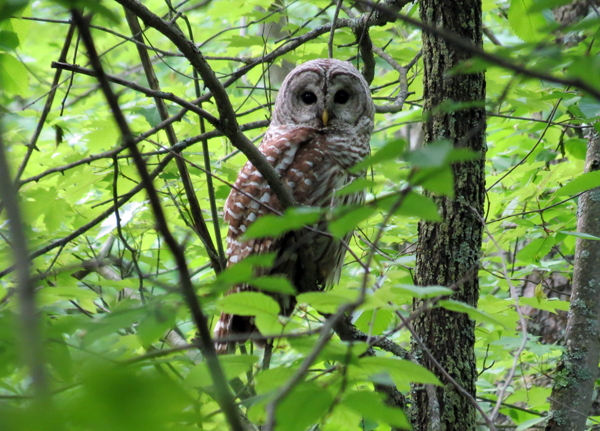
Barred Owl – Salmon Lake Road

.
Prior to our inaugural season in 2009, an impressive list of 119 species were documented as breeders within the boundaries of Frontenac Provincial Park. Over the years our own studies have provided first breeding evidence for another eight species, which includes Red-headed Woodpecker, Red-bellied Woodpecker, Yellow-bellied Flycatcher and Herring Gull, among others. We keep an ongoing record of breeding status for all species encountered in each year, which serves as an invaluable database and service to ecological monitoring in the park. The Frontenac Avian Atlas Day event will provide a substantial boost to our annual coverage by way of a dedicated effort to the task by three skilled teams of biologists! Look for a full report on our mini atlas effort in the week following the event.
.

IMG_0810
Field Sparrow Nest – Slide Lake

.
We extend our sincere thanks to all of you who have sponsored our annual fundraising events in the past – it definitely makes a difference! All donations to this year’s event are tax-creditable and enormously appreciated!! Click here for more information and/or to make a donation.
.

IMG_0804
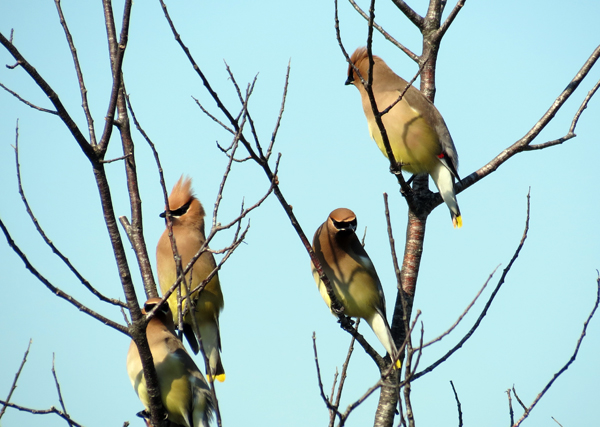
Cedar Waxwing – Big Clear

.

A Hemlock Lake Visit

.

This has to be my favourite spot in all of the FBS study area – Hemlock Lake. Officially, the lake has no name but the abundance of hemlock here made for a convenient and appropriate namesake. I always visit in May, even though we haven’t conducted any fieldwork here since our trial MAPS station was shut down in 2009. It’s just one of those places. It has skinks and otters, lots of Winter Wrens, Brown Creepers and other South Frontenac goodies. On the downside it does seem to have a lot of Deer Ticks. I’ve been bitten twice, both times requiring doses of Doxycycline. It would be an incredible spot for a cottage if not for the aforementioned bloodsuckers and also the tangled mess of downed trees and thick coverage of raspberry canes (the site has endured what appears to have been an outbreak of Hemlock Borer). It’s a rugged place indeed. So rugged that it forced us to discontinue our MAPS station here after only two visits. At the end of each of those field days we felt well and truly knackered. I do hope that no road or cottage ever ends up at Hemlock Lake – it’s rampant wildness is its charm.

.

IMG_0157

.


IMG_0148
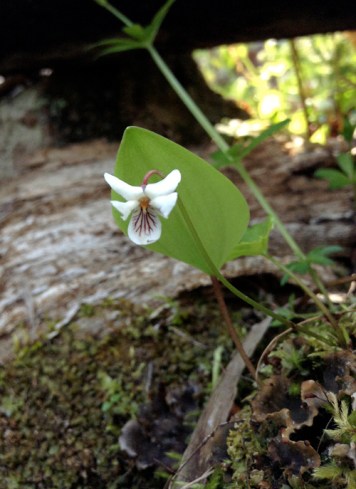
Northern White Violet (Viola Macloskeyi)

.

IMG_0136
Black Morel (Morchella elata)

.

To the woods

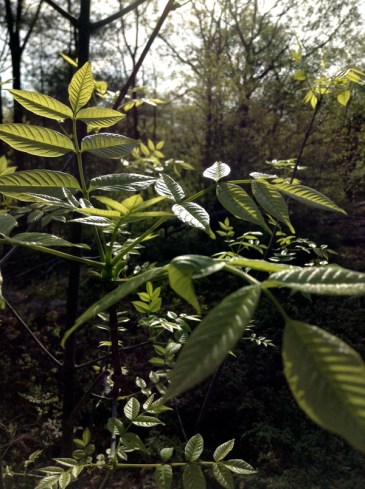
IMG_0058

After a prolonged and complicated change of address it felt good to stroll through Frontenac woods again! The field season has begun. Our plans are full, as usual, but our focus will shift from the more specific pursuits of recent years back to the bigger picture. Point counts, point counts and more point counts are in order. In addition to widespread surveying there will also be demographic monitoring (MAPS and nest searching/atlassing) and a role in a collaborative project with Bird Studies Canada and Canadian Wildlife Service to examine the current population status of Cerulean Warblers in Ontario. The Frontenac Arch is THE hotspot for Cerulean Warblers in Canada. About a half dozen were heard singing this morning amongst the emerging foliage of the forest canopy.

IMG_0080
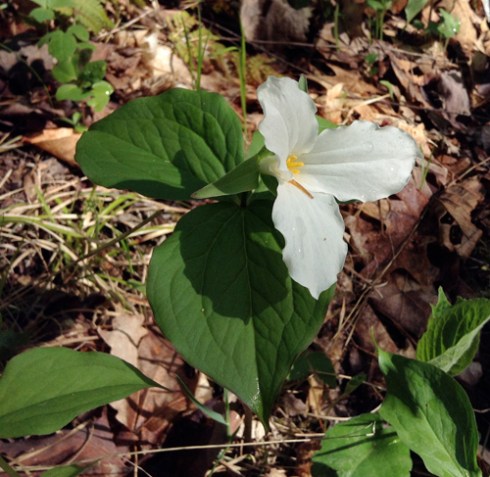
Trilliums are in full bloom

IMG_0073
Net lane #7 at Maplewood
IMG_0059
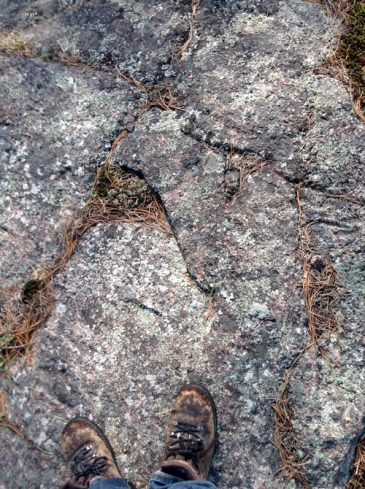
Canadian Shield
IMG_0084
Gray Ratsnake

I still marvel at the number of species with provincially or nationally critical connections to the Frontenac Arch region. The Gray Ratsnake (Pantherophis spiloides) is a perfect example. This is Ontario’s largest snake, growing up to 2.5 meters in length. This species has retracted considerably from its historical range but they seem to be holding on in the Arch – a familiar trend. I found this meter-long individual warming itself on the road this morning. After a bit of resistance from it I was able to move it off the road to safety. Unfortunately, collisions with vehicles are one of its main threats.

map_Gray-Ratsnake
Gray Ratsnake Distribution in Ontario (Ontario Nature)
IMG_0087
Bad photo of a beautiful snake
IMG_0076
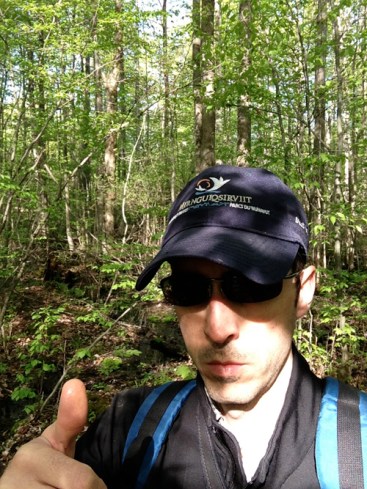
Good first day