Frontenac Bird Studies

Migration Update- May 11, 2009B

IMG_3999

Black-capped Chickadee with nesting material

k

There is no clean division between the migration and breeding seasons. While new migrants continue to arrive in the Frontenac Arch, many are well into their first nesting cycles including this resourceful Black-capped Chickadee. The migration census of May 11 revealed a total of 40 species during the one-hour survey. One of the strengths of monitoring avian migration at coastal sites is that these locations attract a high number of migrants, which stay for very brief periods and also that these sites are generally low in breeding bird abundance and diversity. Conversely, surveys of birds along Canoe Lake Road in May include a disproportionate sample of species that breed in the area and it is therefore difficult to decipher the passage migrants from the “locals”. Repeating these surveys in mid-late June would be necessary to compare and contrast with our spring migration results.

Highlights of the latest census include another singing male Cerulean Warbler, two Golden-winged Warblers and the first arrival of Chestnut-sided Warbler for the spring. Also of note was the discovery of this Yellow-bellied Sapsucker nest, which is unusually positioned within a narrow band of trees at the roadside between two cattle pastures.

IMG_3994

Yellow-bellied Sapsucker nest

g

Results (first of season species in bold)

Canada Goose    2
Common Loon    1
Mourning Dove    3
Ruby-throated Hummingbird    3
Belted Kingfisher    2
Yellow-bellied Sapsucker    2
Northern Flicker    1
Eastern Phoebe    2
Great Crested Flycatcher    4
Warbling Vireo    2
Red-eyed Vireo    6
Blue Jay    5
American Crow    1
Black-capped Chickadee    6
Red-breasted Nuthatch    2
White-breasted Nuthatch    2
Wood Thrush    2
American Robin    3
European Starling    2
Golden-winged Warbler    2
Nashville Warbler    1
Yellow Warbler    3
Chestnut-sided Warbler    1
Yellow-rumped Warbler    1
Pine Warbler    1
Cerulean Warbler    1
Black-and-white Warbler    2
Ovenbird    4
Common Yellowthroat    3
Scarlet Tanager    1
Chipping Sparrow    9
Song Sparrow    3
Swamp Sparrow    1
Rose-breasted Grosbeak    6
Bobolink    1
Red-winged Blackbird    9
Common Grackle    5
Baltimore Oriole    6
Pine Siskin    2
American Goldfinch    8

Season Species Total-89

Filed under: Migration Studies , ,

Migration Update-May 9,2009

sunset

Returning from the field on Kingsford Lake

I’ve been slowly transitioning from the office to the field since May began, which has been a welcome change. The image above was taken during a recent boat trip to one of various field sites in the area. Our modest watercraft will be used extensively throughout the summer to access key sites along the western edge of Frontenac Provincial Park via Kingsford and Birch Lakes. Powered by an electric motor, our fiberglass vessel is appropriate for us in being environmentally sound and quiet, although perhaps a little lacking in the speed department!

The migration census scheduled for the 8th was postponed by a day and conducted instead on Saturday, May 9th. At the first step of the survey it was obvious that birds were plentiful, many of which were newly arrived to the area. I decided it might be instructive to examine habitat associations of migrants along Canoe Lake Road. The normal census route (CLR1) travels south along the narrow graveled road for 1.2 kilometers through a varied mix of habitats, which includes mixed-age deciduous forest stands, meadow and various successional habitats along edges. Cottage residences and farm fields create a more open landscape along the length of the route. Conversely, traveling north from the start point passes through a much less open environment with predominantly mature deciduous forest with fewer clearings and edge components. Yesterday morning, upon completion of CLR1, I returned to the start point and conducted a survey with the same methodology but this time in the opposite direction through the mature forests (CLR2).

Results

A total of 38 species were recorded along CLR1, which included seasons firsts of Barn Swallow, Barred Owl, Bobolink and a striking Cerulean Warbler during the final minute. A pair of Yellow-throated Vireos in a hedgerow near the large meadow was a treat along with first records of Wood Thrush and Ruby-throated Hummingbird for the spring surveys. A season high of six Ovenbirds was also a highlight of the survey. Upon return to the start point, I flipped to a new page of my field notes and began an independent survey of birds along the length of CLR2 (1km). There were some notable contrasts, the most apparent of which was the tally of 19 Ovenbirds, a substantial increase in density compared results for CLR1! A total of 40 species were recorded, consisting of thirteen not recorded at all on CLR1. Scarlet Tanager, Black-and-white Warbler, Great Crested Flycatcher and the aforementioned Ovenbirds were substantially more common in the mature, less fragmented habitats of CLR2. Results in the table below are likely reflective of species-specific preferences of habitat size, type, structure and continuity.

The stopover ecology of various species is a growing subject of study for scientists and for good reason. Migratory bird populations are dependent on the availability of viable habitats for rest and refueling. Without these “stopover sites”, most migratory bird species would fail to reproduce each summer. Relatively little is known about the characteristics and function of the Frontenac Arch as a stopover area for migrating birds. Simultaneous surveys of migrants in divergent habitat types on a regular basis in both the spring and fall would be an instructive first step toward a basic description of landbird migration in the region.

table

Filed under: Migration Studies

Migration Update: May 4-6, 2009

img_3703

Golden-winged Warbler- May 4, 2009

Spring migration along Canoe Lake Road continues to impress as new species arrive from the south with each passing day. Highlights of the census on May 4th include a Sora calling from one of the small wetlands along the roadside and the remarkably late first appearance of Hermit Thrush for the survey route this spring. Hermit Thrushes are now on territory and can be heard regularly, particularly along conifer-bearing shorelines of lakes in the area. There are few sounds in nature more haunting than the ethereal song of a Hermit Thrush on a calm spring or summer evening. Their vocalizations are uniquely complex amongst the songbirds as they, and other thrush species, possess the equivalent of two sets of vocal chords, which enables them to intertwine two songs at the same time. Donald Kroodsma, the heavily recognized authority on avian vocalization, has done some fascinating work on thrushes, a sample of which you can listen to in this clip from NPR’s Fresh Air program. The male Golden-winged Warbler pictured above has been recorded actively singing from the same “spot” since May 2 and appears to be setting up a territory for the summer. This species was recently listed by COSEWIC as threatened. The Frontenac Axis is a core breeding zone for this species in Ontario.

On May 6 a total of 36 species were tallied, which included season firsts of Wood Thrush, Savannah Sparrow and a pair of lingering Ring-necked Ducks. White-throated Sparrows and kinglets continue to elude our eyes and ears during the surveys, although a couple of White-throats and Ruby-crowns were observed on the 6th. There are roughly four weeks remaining in this year’s spring migration and the majority of local breeding species have yet to arrive. The Spring Migration Census program will continue on a semi-daily basis until May 31st when our core program, Frontenac Breeding Birds, will kick off.

Spring Species Total: 77
Average # individuals/census: 149
Average # species/census: 32

Filed under: Migration Studies , , , ,

Migration Update- May 2, 2009

l2

Frontenac Provincial Park

Just a quick note for today. We’ve been quite busy of late getting ready for the upcoming Frontenac Breeding Birds program. I ended up hiking a little over twenty kilometres for various treks between Thursday and Saturday, which I am pleased to say was a very enjoyable and productive endeavour. The high winds of recent days were a help in keeping some of the voracious Black Flies at bay! The image included above is from one of the most scenic vantage points encountered during these travels. Results from Saturday’s migration census are posted below. Migration has slowed in the past week due to some cooler weather with less favourable winds but the total of 41 species counted yesterday was a respectable tally. The highlight of the census was finding a singing male Golden-winged Warbler at the very end of the count. Warm temps and south winds are forecast for the overnight and into tomorrow, which should provide some great birding in the area! The next spring migration census along Canoe Lake Road is scheduled for bright and early tomorrow morning.

Results (first of season species in bold)

Hooded Merganser 2
Common Loon 1
Red-shouldered Hawk 3
Herring Gull 1
Mourning Dove 3
Yellow-bellied Sapsucker 2
Hairy Woodpecker 1
Northern Flicker 3
Pileated Woodpecker 2
Eastern Phoebe 2
Great Crested Flycatcher 2
Yellow-throated Vireo 1
Blue Jay 5
American Crow 4
Common Raven 1
Tree Swallow 2
Black-capped Chickadee 9
Red-breasted Nuthatch 2
White-breasted Nuthatch 1
American Robin 5
European Starling 3
Golden-winged Warbler 1
Yellow Warbler 1
Yellow-rumped Warbler 2
Black-throated Green Warbler 1
Pine Warbler 2
Palm Warbler 1
Black-and-white Warbler 4
Ovenbird 1
Northern Waterthrush 1
Chipping Sparrow 3
Song Sparrow 7
Swamp Sparrow 2
White-throated Sparrow 1
Rose-breasted Grosbeak 2
Red-winged Blackbird 30
Rusty Blackbird 1
Common Grackle 11
Baltimore Oriole 2
Pine Siskin 4
American Goldfinch 7

Spring species total=70
Average # individuals/census=141
Average # species/census=31

Filed under: Migration Studies

Migration Update- April 30, 2009

home

Hooded Mergansers, Kingsford Lake

Census results from yesterday morning show a reduction in diversity and abundance of migrants but there was still a pleasing variety of species present. The first Yellow-throated Vireo, Nashville Warbler and Baltimore Oriole of the spring surveys were recorded. I have been pondering the mysterious near-absence of White-throated Sparrows and kinglets along this stretch of Canoe Lake Road. A total of just ten White-throats and ten Ruby-crowns have been tallied from ten surveys since mid-April! Also, not a single Hermit Thrush has been recorded during the spring counts, although they have been spotted regularly in forest-interior locations. These three species are abundant migrants, representing a significant portion of migrants tallied at most Great Lakes migration hotspots in April and early May. It is reasonable to suspect that migrants in this area are afforded a significantly greater selection of habitats and array of foraging opportunities. Predominant edge habitats in the area such as those along roadsides and at the borders of agricultural fields and meadows have been noticeably quiet for migrants compared to forest interiors. This pattern is opposite to that for autumn 2009 when edges with marginal habitats in early succession were key features for concentrating migrants. More study needed……

Results (first of season species in bold)

Canada Goose 83
Common Loon 2
Belted Kingfisher 1
Yellow-bellied Sapsucker 2
Hairy Woodpecker 1
Northern Flicker 6
Eastern Phoebe 3
Great Crested Flycatcher 2
Yellow-throated Vireo 1
Warbling Vireo 1
Blue Jay 4
American Crow 9
Black-capped Chickadee 6
Red-breasted Nuthatch 2
White-breasted Nuthatch 1
European Starling 4
Nashville Warbler 1
Yellow Warbler 3
Yellow-rumped Warbler 3
Black-throated Green Warbler 2
Pine Warbler 2
Chipping Sparrow 7
Song Sparrow 4
Swamp Sparrow 1
Rose-breasted Grosbeak 2
Red-winged Blackbird 28
Rusty Blackbird 1
Common Grackle 9
Baltimore Oriole 1
Purple Finch 1
American Goldfinch 5

Spring Species Total=67
Average # Individuals per Census=150.4
Average # Species per Census=30.1

Filed under: Migration Studies

Birds at the feeders

Common Grackle (Quiscalus quiscula)

Common Grackle (Quiscalus quiscula)

Common Grackles have been second only to Red-winged Blackbird in terms of abundance in the area of late. A dedicated group of about 20-40 individuals have been frequenting the feeders at the FBS “office”. This species has already begun nesting in the region and will be commonly encountered during the Frontenac Breeding Birds program in late spring through summer.

Purple Finch (Carpodacus purpureus)

Purple Finch (Carpodacus purpureus)

Purple Finches were scarce during the past winter but have returned to the area en masse in the last month or so. Much like other northern finch species, populations of the Purple Finch are closely tied to seed crops and also outbreaks of budworm catterpillars in the north. Distribution and abundance maps from the Ontario Breeding Bird Atlas mark a strong association of this species to the Southern Shield region where high quantities of suitable habitat can be found (coniferous and open mixed-deciduous forest). Despite its more robust features, interspecific competition with the introduced House Finch (Carpodacus mexicanus) has significantly reduced population size of the Purple Finch.

Our first Rose-breasted Grosbeaks of the spring were recorded this morning and we’ve been fortunate in having two males join the finches and grackles at the feeders this afternoon.

Rose-breasted Grosbeak (Pheucticus ludovicianus)

Rose-breasted Grosbeak (Pheucticus ludovicianus)

Filed under: Migration Studies , , ,

Migration Update- April 28. 2009

piwa

Pine Warbler, Canoe Lake Road

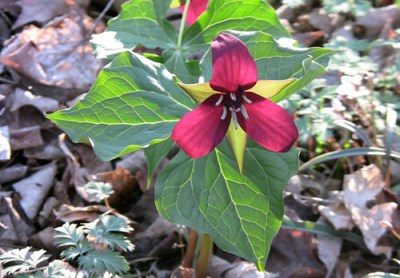
Migrants arrived in high numbers over the weekend! The recent warm front was brief but a “cooker” nonetheless, bringing an excellent variety of insectivorous migrants to southern Ontario. This mornings survey along Canoe Lake Road featured overcast skies, warm temperatures and a sharp increase in budding foliage. Emerging ground cover species including Dutchman’s Breeches, Bloodroot and Large-flowered Trillium have brightened up the forest floor and American Toads are suddenly the most vocal of amphibians in the area.  I also spent the 60 minutes of the survey entertaining an attendant mob of excited Black Flies, which was a less welcome change from recent days!

redtrillium

Large-flowered Trillium (red morph)

Semi-daily surveys of migrant birds along Canoe Lake Road have been very interesting to say the least and some patterns of habitat relation and orientation are beginning to emerge. Other than the usual icterid species (Red-winged Blackbird and Common Grackle), there were no particular species in great supply this morning. A total of fifteen new arrivals were tallied, which included eight newly arrived warbler species. Also new to the scene were singles of Rose-breasted Grosbeak and Eastern Towhee, both common breeders in the region. The next update on spring migration along Canoe Lake Road will be posted on April 30, 2009.

Results (“first of season” species in bold)

Canada Goose    5
Mallard    2
Ruffed Grouse    1
Common Loon    1
Red-shouldered Hawk    1
Mourning Dove    2
Belted Kingfisher    1
Yellow-bellied Sapsucker    4
Downy Woodpecker    1
Northern Flicker    4
Eastern Phoebe    3
Great Crested Flycatcher    2
Warbling Vireo    1

Blue Jay    4
American Crow    7
Black-capped Chickadee    8
Red-breasted Nuthatch    1
House Wren    3
Ruby-crowned Kinglet    3
American Robin    5
Brown Thrasher    2
European Starling    4
Orange-crowned Warbler    1
Yellow Warbler    3
Yellow-rumped Warbler    11
Black-throated Green Warbler    1
Pine Warbler    5
Black-and-white Warbler    2
Ovenbird
2
Common Yellowthroat    1
Eastern Towhee    1
Chipping Sparrow    4
Song Sparrow    3
Dark-eyed Junco    1
White-throated Sparrow    5
Rose-breasted Grosbeak    1
Red-winged Blackbird    26
Eastern Meadowlark    2
Rusty Blackbird    2
Common Grackle    14
Purple Finch    1
Pine Siskin    6
American Goldfinch    3

Spring Species Total=63
Average # Individuals per Census=144.6
Average # Species per Census=30

Filed under: Migration Studies , , ,

Migration Census- 24/04/2009

hepatica

Round-lobed Hepatica

Results (first of season species in bold)

Canada Goose 7
Ruffed Grouse 1
Common Loon 1
Turkey Vulture 1
Red-shouldered Hawk 2
Ring-billed Gull 1
Mourning Dove 1
Yellow-bellied Sapsucker 2
Downy Woodpecker 1
Hairy Woodpecker 2
Northern Flicker 4
Pileated Woodpecker 1
Eastern Phoebe 4
Blue Jay 9
American Crow 1
Horned Lark 1
Tree Swallow 1
Black-capped Chickadee 4
White-breasted Nuthatch 3
Ruby-crowned Kinglet 3
American Robin 10
European Starling 6
American Tree Sparrow 1
Chipping Sparrow 4
Song Sparrow 17
Swamp Sparrow 1
Dark-eyed Junco 7
Red-winged Blackbird 14
Common Grackle 25
Purple Finch 2
Pine Siskin 8
American Goldfinch 13

Season Species Total=47

Filed under: Migration Studies , ,

Migration Census- 20/04/2009

bluejay2

Blue Jay (detail)

Conditions during this morning’s census were mild with overcast skies and a light easterly wind. The absence of south winds has prevented many migrants from reaching the area. A significant warm front is due this week (following three days of rain), which should bring the next wave of migrants along with it. Four season firsts were detected this morning along with many of the local resident/breeding species. New species for the 2009 Spring Migration Census included Cooper’s Hawk (1), Ruffed Grouse (1), Herring Gull (1) and White-throated Sparrow (2). In total, a respectable 34 species were tallied during the survey, which brings the season total of species recorded to 40.

The last two weeks have been very busy for us as we work on finalizing our plans for the upcoming breeding season. Things are certainly shaping up but we still have lots of work ahead of us. We will be updating the blog with more breeding bird updates, articles and video content in the coming weeks. Also note that FBS is now on Twitter (see sidebar for latest updates from the field)!

Results (first of season species in bold)

Canada Goose    27
Ruffed Grouse    1
Common Loon    1
Turkey Vulture    1
Cooper’s Hawk    1
Red-shouldered Hawk    2
Ring-billed Gull    3
Herring Gull    1
Mourning Dove    2
Yellow-bellied Sapsucker    2
Downy Woodpecker    1
Hairy Woodpecker    2
Northern Flicker    1
Pileated Woodpecker    2
Eastern Phoebe    2
Blue Jay    4
American Crow    6
Black-capped Chickadee    7
Red-breasted Nuthatch    1
Brown Creeper    1
Golden-crowned Kinglet    3
American Robin    7
European Starling    4
American Tree Sparrow    1
Chipping Sparrow    2
Song Sparrow    3
White-throated Sparrow    2
Dark-eyed Junco    1
Red-winged Blackbird    18
Common Grackle    29
Brown-headed Cowbird    3
Purple Finch    1
Pine Siskin    4
American Goldfinch    4

Season Species Count: 44

Filed under: Migration Studies ,

Migration Census- 18/04/2009

barredowl

Barred Owl, Devil Lake Road

The fourth census of the spring season was completed this morning. Weather was warm and calm with overcast skies. A singing male Ruby-crowned Kinglet was the first species recorded, a good sign that some new migrants had filtered into the area. A total of 32 species were noted, which included eight newly arrived species. The most noteworthy amongst the arrivals was a group of four Double-crested Cormorants flying low toward the north. Cormorants nest in the region in small numbers. Golden-crowned Kinglets (3) and Brown Creepers (1) did make first appearances as did Tree Swallow (1) and Chipping Sparrow (2).

raindrops

As promised, an attempt was made to survey for nesting owls in the study area, which was quickly thwarted by the incredible abundance and vocal prowess of local frogs. Spring Peepers, Leopard Frogs, Wood Frogs and Chorus Frogs, all seemed to be singing from every lake, pond, pool and puddle along Canoe Lake Road. I could easily hear Barred Owls answering my iPod, however the soprano-like tones of Eastern Screech Owl and Northern Saw-whet Owl would have been very difficult to detect. We will plan to revisit this study in early spring 2010. A trip to a favourite mixed-forest plot on Devil Lake Road revealed a Barred Owl, which I strongly suspect has a nest nearby. I am planning a return visit to determine if this individual is nesting or simply a “lone wolf”.

Results (new arrivals in bold)

Canada Goose    47
Common Loon    5
Double-crested Cormorant    4
Turkey Vulture    1
Red-shouldered Hawk    1
Ring-billed Gull    2
Mourning Dove    2
Yellow-bellied Sapsucker    4
Downy Woodpecker    1
Northern Flicker    3
Eastern Phoebe    6
Blue Jay    7
American Crow    7
Tree Swallow    1
Black-capped Chickadee    13
Red-breasted Nuthatch    4
White-breasted Nuthatch    1
Brown Creeper    1
Golden-crowned Kinglet    3
Ruby-crowned Kinglet    1

American Robin    11
European Starling    2
American Tree Sparrow    1
Chipping Sparrow    2

Fox Sparrow    1
Song Sparrow    6
Dark-eyed Junco    4
Red-winged Blackbird    19
Common Grackle    18
Brown-headed Cowbird    2
Pine Siskin    5
American Goldfinch    5

Spring Species Total: 40

Filed under: Migration Studies

blog frontenacarch avianmigration breedingbirds support contactus links

FBS on Twitter

  • Final report on the 2009 field season is finally complete! Contact us for more information. 1 month ago
  • Very pleased to announce funding support for Frontenac Bird Studies has been received from TD Friends of the Environment Foundation! 4 months ago
  • Fieldwork for year 1 of Frontenac Breeding Birds is now complete. The time has arrived for data entry and reporting.... 7 months ago
  • A foggy morning at Maplewood MAPS site today. Found 2 sparrow nests & banded Indigo Bunting, Hermit Thrush and Scarlet Tanager among others! 7 months ago
  • Finally back online after three weeks away. New content coming to the site tomorrow! 7 months ago

FBS Archives

Calender

March 2010
M T W T F S S
« Dec    
1234567
891011121314
15161718192021
22232425262728
293031  
Nature Blog Network